
From ancient ball games to the global game
The History of Football
Four thousand years of kicking, arguing about rules, and turning a folk pastime into the most-watched sport on earth.
c. 200 BCE onward
1863 · The Laws
1904 · FIFA
1930 · First World Cup
Hook: football is not one invention. Many cultures kicked balls, but only one line of descent produced the game we know. Swipe or use the arrows to move through the deck.
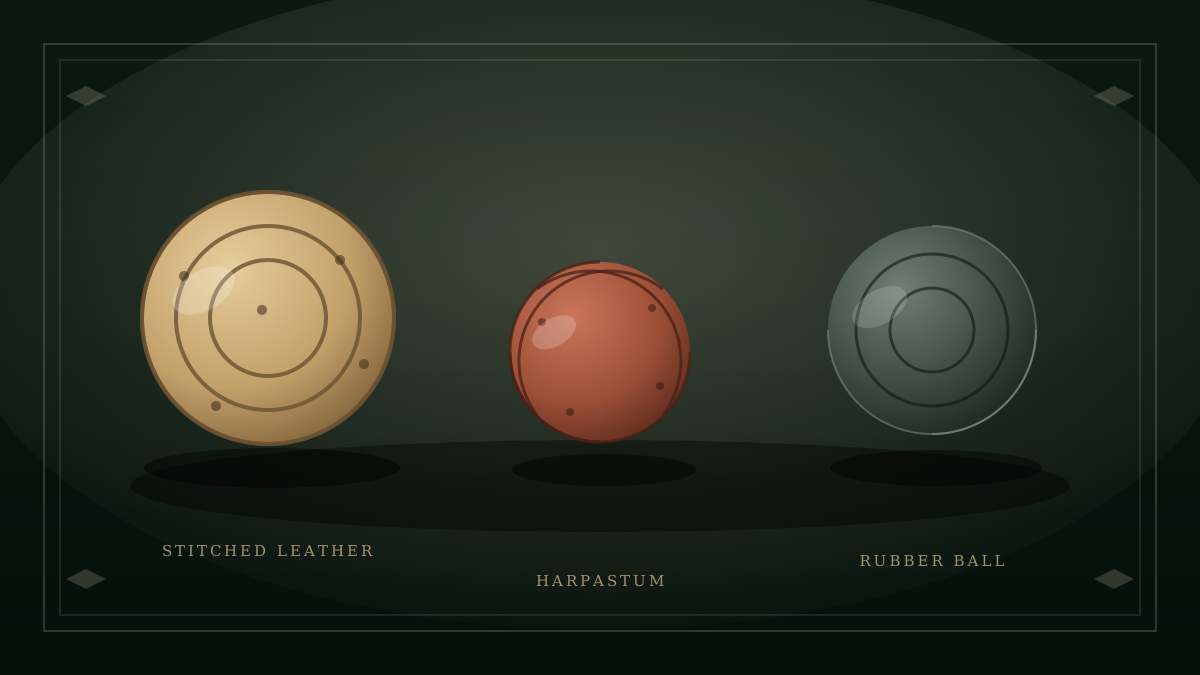
Before the rulebook
Every continent had a ball game
Stitched leather in China, rubber in Mesoamerica, stuffed hides in the Mediterranean. The equipment changes; the impulse does not.
Emphasise that these games are not ancestors of football in a straight line. They are evidence of how universal the idea is.
Where it starts
Ball games are older than every rulebook
Long before anyone wrote down a law, people were already kicking, throwing and carrying a ball. The games differ wildly — the instinct is universal.
- c. 200 BCE – 200 CECuju is formalised in Han-dynasty China as military training: two teams, a ball of leather stuffed with hair, and nets strung between bamboo poles.
- c. 600 CEKemari spreads in Japan — a cooperative circle game with no winners, still played at some shrines today.
- c. 400 BCEEpiskyros in Greece and later harpastum in Rome: team ball games violent enough to need officials.
- Medieval EuropeFolk "mob football" takes root in Britain: whole villages, no pitch, almost no rules.
Cuju is the earliest game with something like rules and equipment resembling a ball. Mob football is the rowdy ancestor of the organised game.
Medieval Britain
Village against village, and no pitch at all
Mob football was less a sport than a scheduled riot. Hundreds of players, goals at either end of the parish, and injuries taken as part of the fun.
The fieldAnywhere between two landmarks — a church, a market cross, a river — sometimes several kilometres apart.
The ballAn inflated pig's bladder, or a stitched leather case. Balls were rare and precious enough to be prizes.
The lawRepeatedly banned in England between the 14th and 17th centuries — for violence, and for keeping archers from practice.
- 1815 — the Eton wall game shows how far schools had already diverged into their own local codes.
- 1848 — the Cambridge Rules become the first serious attempt at a shared code for different schools.
The Cambridge Rules of 1848 are the direct ancestor of the 1863 laws: they already banned carrying the ball and handling it above the waist.
1863 · Freemasons' Tavern, London
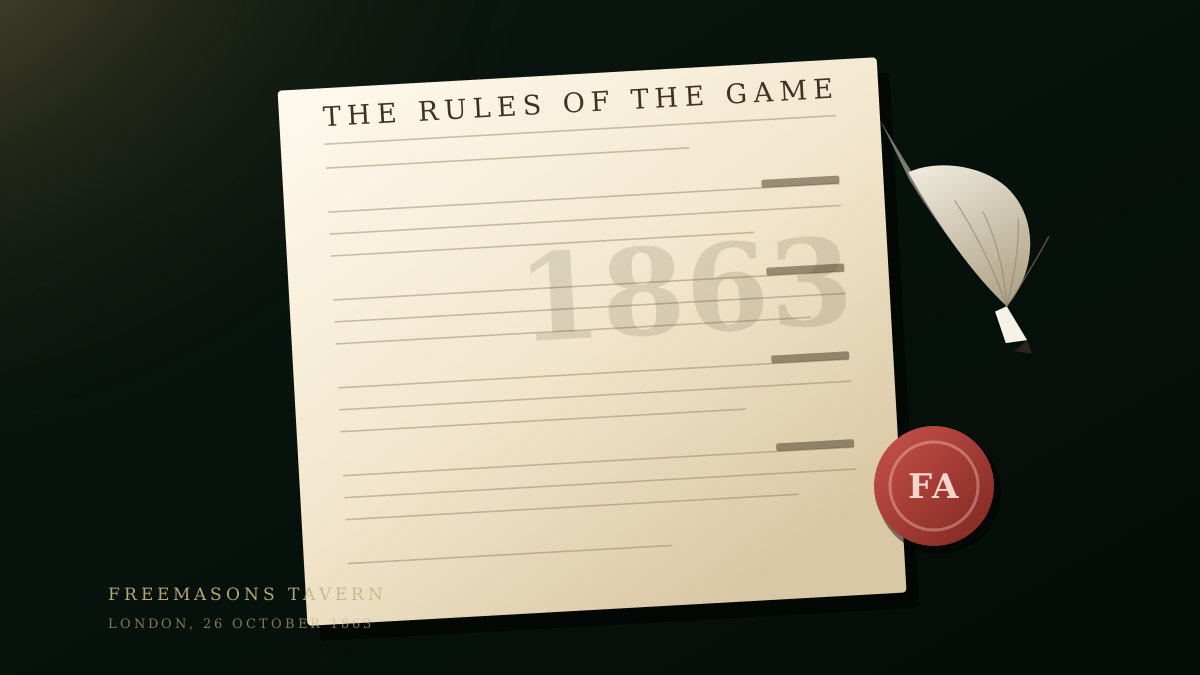
26 October 1863 — the laws are written down, and the FA is founded
The day the game got a rulebook
Representatives of London clubs met to agree one set of rules. The argument that mattered was handling: carry the ball, or kick it?
- Handling was banned. The Blackheath club walked out in protest and drifted toward the game that became rugby.
- Thirteen laws were set down — the pitch, the goal size, offside, and what counted as a foul.
- "Hacking" (kicking an opponent's shins) was outlawed in 1863, then briefly legalised, then outlawed for good in 1871.
The word "soccer" is British, not American: it is a shortening of "association football", used to distinguish it from rugby football.
1870s – 1880s
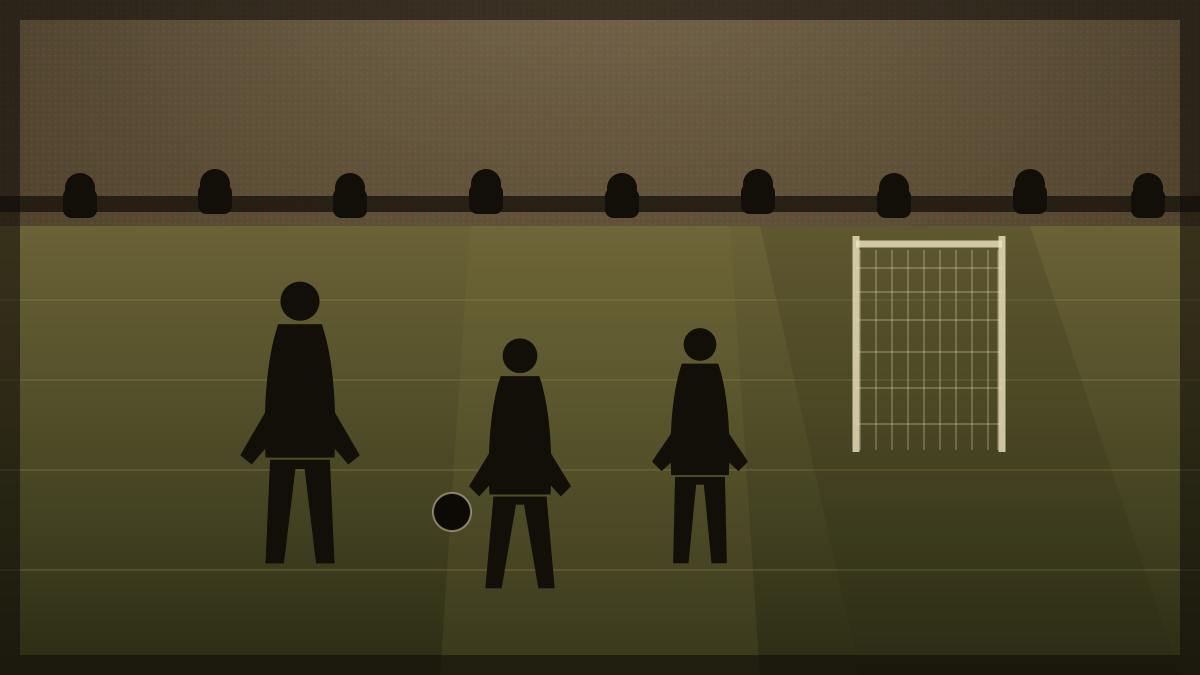
Victorian football — wooden posts, heavy boots, and a crowd pressed against the rope
From gentlemen's pastime to national obsession
Within twenty years the game had crowds, cups, gate money and a professional class of player — plus an awkward argument about who was allowed to play.
- 1871 — the FA Cup is created; the first final is played in 1872.
- 1885 — professionalism is legalised, ending years of shamateurism and under-the-table payments.
- 1888 — the Football League is founded: twelve clubs, a fixture list, and the world's first league season.
- 1889 — the first women's football match in Britain is recorded, in north London.
Note the tension: the game spread fastest in industrial towns, where Saturday half-days gave workers the time to watch and play.
1872 – 1900
The game crosses borders
Football travelled with the people who carried it: sailors, railway engineers, mill owners, teachers and students — and it arrived faster than any rulebook could follow.
- 1872 · GlasgowScotland 0–0 England at Hamilton Crescent — the first official international, watched by around 4,000 people.
- 1880s · EuropeBritish workers and students plant the game in Denmark, the Netherlands, Austria, Hungary and Italy; local federations follow within a decade.
- 1888 · ArgentinaThe first football club outside the British Isles is founded in Buenos Aires — and the game takes root across South America.
- 1895 · ParisEngland and France meet in a women's international, widely cited as the first official match of its kind.
By 1900 the game had clubs, cups, crowds and a professional wage — but no global governing body.
The spread was informal and often accidental. Rules moved in suitcases, not by decree.
1904 · Paris
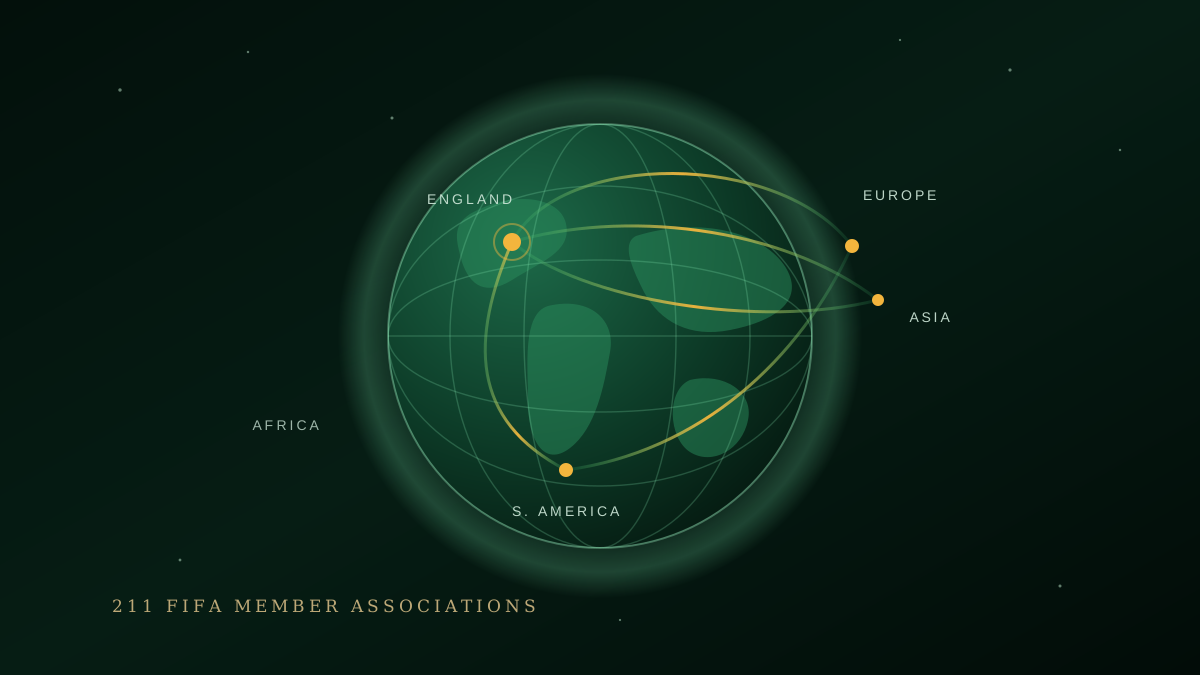
211 member associations — from seven founding nations in 1904
FIFA, and a game with a government
Seven national associations founded FIFA in Paris on 21 May 1904 so that international matches had consistent laws and a body to arbitrate them.
- The founders: France, Belgium, Denmark, the Netherlands, Spain, Sweden and Switzerland.
- England joined in 1905 — the game's inventors were late to the institution that would run it.
- 1908 — football becomes an Olympic sport in London, giving the game its first global stage.
- Today: 211 members make FIFA one of the largest international bodies on earth.
FIFA exists because club football had already outgrown the ability of national associations to agree among themselves.
1930 · Montevideo
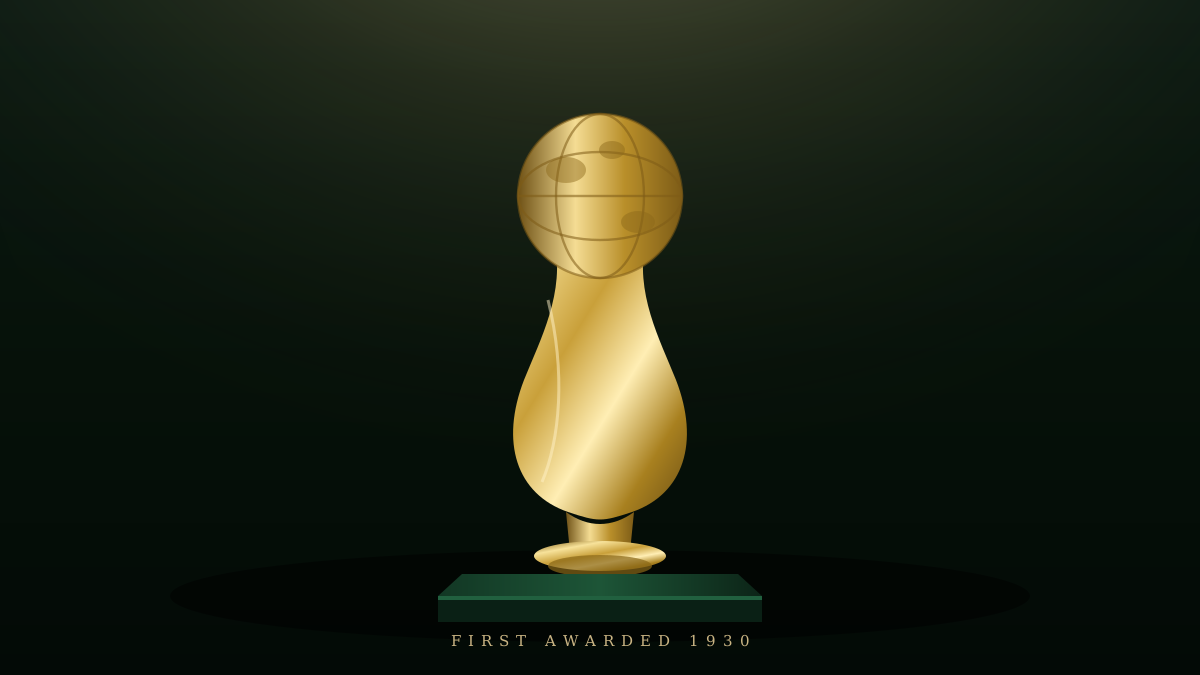
Hosted and won by Uruguay — 13 teams, one trophy, and a new template for the game
The World Cup is born
FIFA's own tournament arrived in 1930, timed to Uruguay's centenary of independence. Thirteen teams made the voyage; Europe sent four.
- Final: Uruguay beat Argentina 4–2 in Montevideo in front of a crowd of roughly 90,000.
- 1950: Uruguay beat Brazil 2–1 at the Maracanã — the "Maracanazo", still the most famous upset in the tournament's history.
- 1970: Brazil's third title earns them permanent possession of the original Jules Rimet trophy.
- 2026: the field expands to 48 teams, hosted by the United States, Canada and Mexico — the first three-nation World Cup.
If asked about the 2026 result, say that I cannot verify it here and point to FIFA's official records rather than guessing.
The record book
Eight nations have shared every title
Twenty-two tournaments between 1930 and 2022, and the trophy has never travelled far. Five countries have won it more than twice.
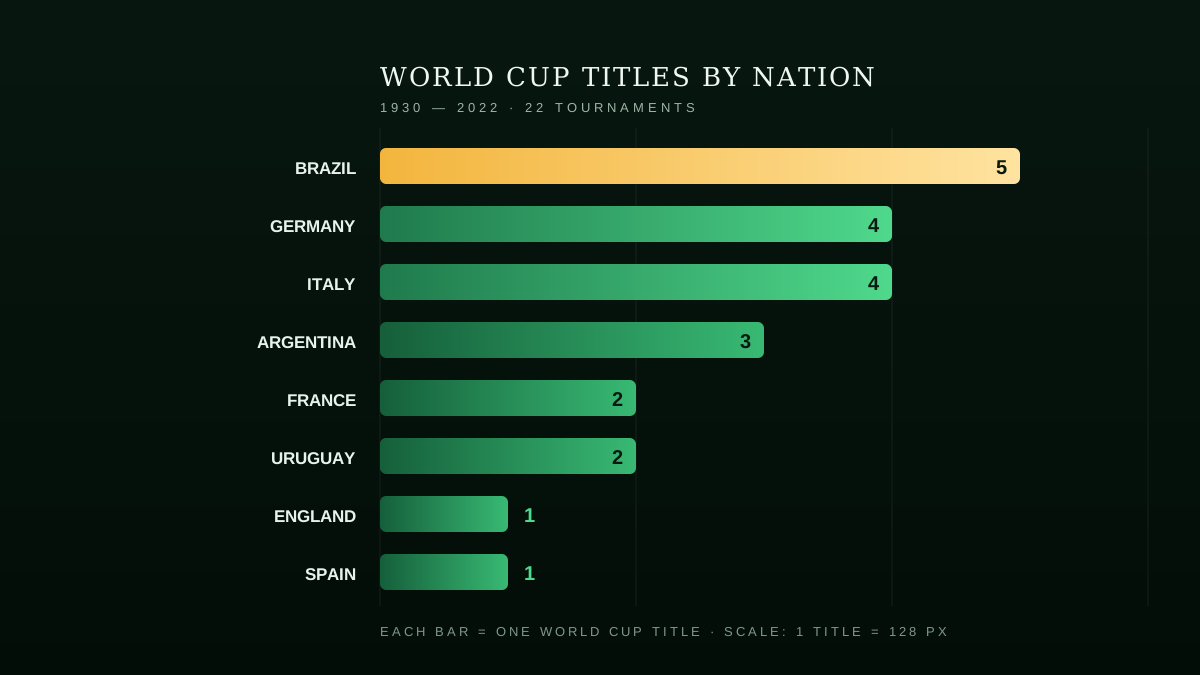
FIFA World Cup titles by nation · 1930 – 2022
- Brazil are the only nation to have appeared at every single tournament.
- Germany 2014 was the first European win at a World Cup staged in the Americas.
All eight winners, with title counts as of the 2022 final. I have not been able to verify any 2026 result, so the chart stops at 2022.
1945 – 1975
The boom years and the tactical revolution
Television, floodlights and jet travel turned a European and South American game into a global one — and coaches started to think in systems rather than positions.
1954 · BaselUEFA is founded
Europe gets its own governing body, followed in 1955 by the European Cup and in 1960 by the European Championship.
1958 · SwedenA 17-year-old named Pelé
Brazil win their first World Cup with a teenager up front — the moment the game acquires a global superstar.
1974 · West GermanyTotal football
The Netherlands' fluid system, where every player covers every position, resets what a team can look like.
- 1960 — the first European Championship is staged, won by the Soviet Union.
- 1966 — England win the World Cup at home, still their only title.
- 1970 — the Mexico World Cup is broadcast in colour to the world, and Brazil's team is called the best ever assembled.
The tactical story runs from W-M and Metodo through catenaccio to pressing, but the 1970s are the hinge: systems become as important as individuals.
Half the game, half the history
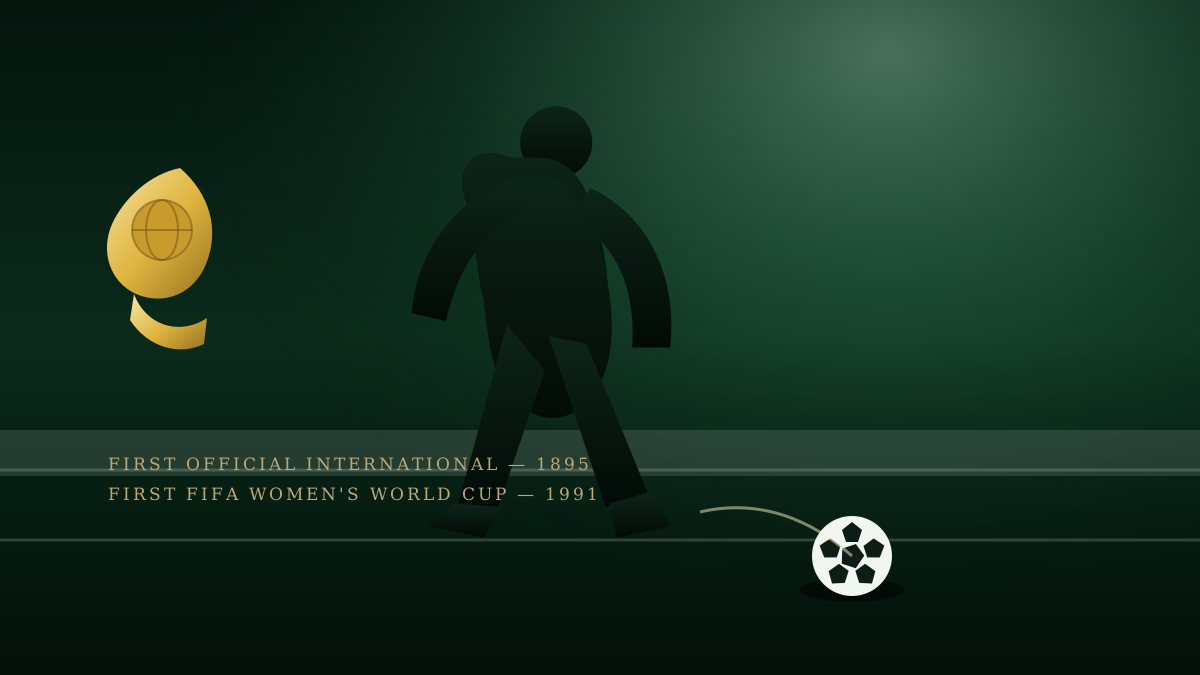
From record crowds in 1920 to a global professional game
The women's game: banned, rebuilt, booming
Women's football grew fast enough to frighten the authorities, was shut down for fifty years, and came back to fill stadiums.
- 1920 · Goodison Park — a women's match draws a reported crowd of over 50,000.
- 1921 — the English FA bans women's teams from its grounds; the ban lasts until 1971.
- 1991 — the first FIFA Women's World Cup is held in China, won by the United States.
- 2023 — Spain win the Women's World Cup, after a tournament watched by a record global audience.
The 1921 ban is the central fact here: the game did not fail to grow, it was actively suppressed.
1985 – 2010
Television money rewrites the game
Satellite rights, rebranded competitions and a court ruling on player contracts turned football into a global entertainment industry — with all the friction that brings.
- 1992The UEFA Champions League is rebranded and the Premier League is founded in England — both built for television.
- 1995The Bosman ruling lets players move freely when their contract expires, shifting power from clubs to players.
- 1998The World Cup expands to 32 teams, and prize money and broadcast income begin to climb steeply.
- 2000s – 2010sBroadcast rights and transfer fees multiply; clubs become global brands with supporters on every continent.
The same decades bring the sport's biggest scandals: match-fixing investigations, governance crises at FIFA in 2015, and a failed European Super League in 2021.
Keep the tone factual. The commercial story and the integrity story are the same story, told from two sides.
2012 – today
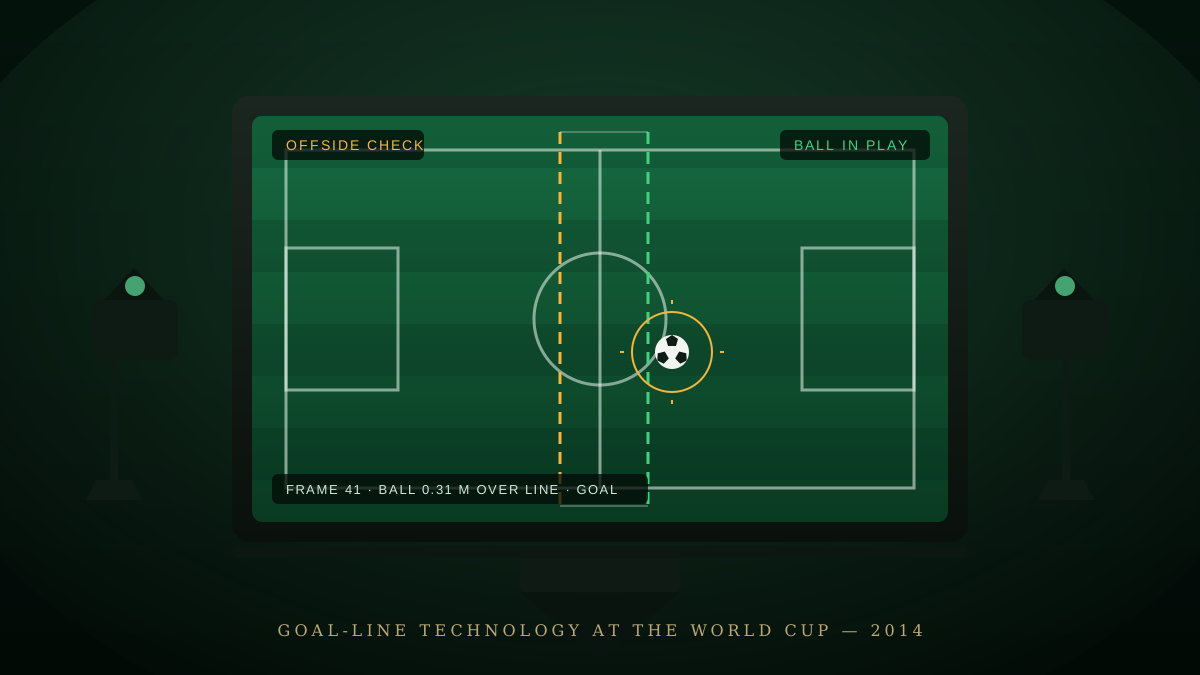
Officiating moves from the referee's eyes to line-drawing software
When the camera becomes the referee
The last decade has been about reducing doubt: knowing exactly when the ball crossed the line, and exactly who was offside.
- 2012 — the laws are changed to allow goal-line technology; it debuts at the 2014 World Cup in Brazil.
- 2018 — VAR is used at a World Cup for the first time, in Russia, and changes how penalties are awarded.
- 2022 — semi-automated offside detection uses limb-tracking cameras to cut decision times to seconds.
- The argument — accuracy improves, but debate about stoppages and "toenail offsides" has not gone away.
Technology did not remove controversy; it relocated it — from what the referee saw to how the software measures the moment of contact.
The whole story on one line
Eight moments that made the game
From a London tavern to a 48-team finals: the through-line of the last 160 years.
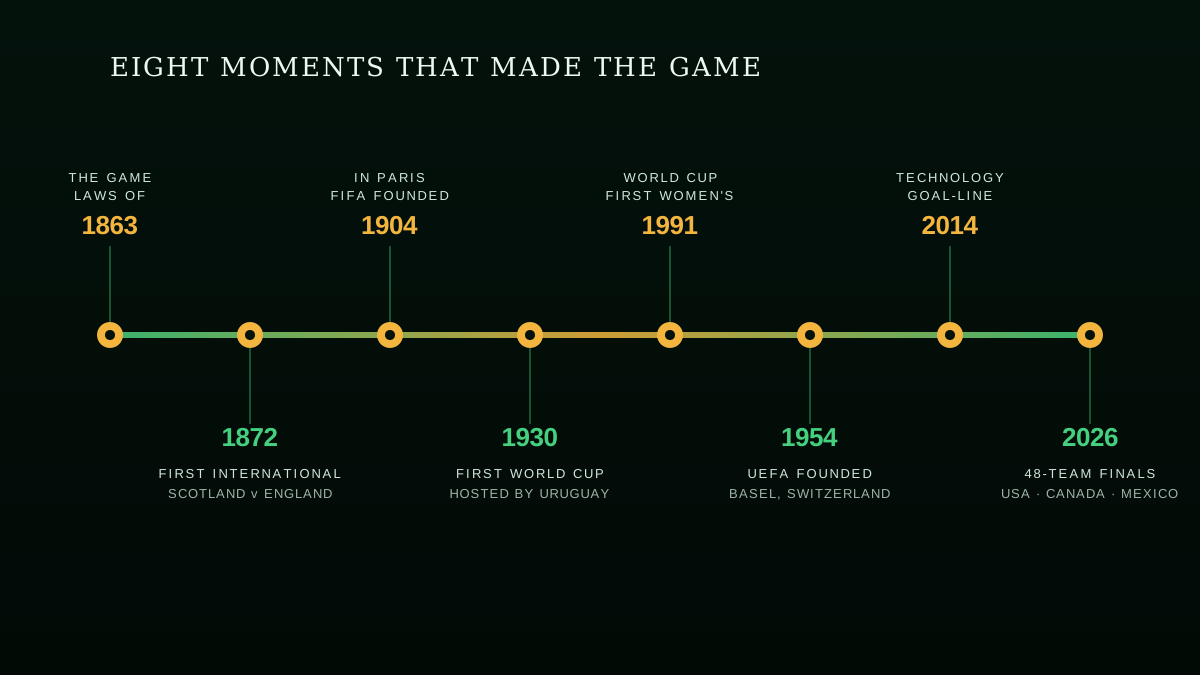
Milestones from 1863 to 2026
Use this as the recap slide. Invite the audience to name the moment they would add or move.
The laws today
What the 1863 rulebook became
Thirteen laws agreed in a London tavern have grown into a detailed code administered by IFAB, reviewed every year.
| Law | Detail |
|---|
| The pitch | 100–110 m long and 64–75 m wide; the standard for internationals is 105 × 68 m. |
| The team | Eleven players a side, with up to five substitutes in most competitions. |
| The match | Two 45-minute halves plus stoppage time, then two 15-minute periods of extra time if a result is required. |
| The ball | Size 5, 68–70 cm in circumference and 410–450 g at the start of play. |
| Offside | A player is offside if part of the body that can legally play the ball is beyond the second-last opponent when the ball is played. |
IFAB — the International Football Association Board — still governs the laws, with four seats for the UK associations and four for FIFA.
The game in numbers
A local custom that became the world's default sport
211
FIFA member associations
48
Teams in the 2026 World Cup finals
13
Teams in the first World Cup, 1930
1863
The year the laws were first written down
- Played everywhere: more countries enter football competitions than any other sport, and it is the most-followed game on earth by a wide margin.
- Cheap to start: a ball and a flat surface is the entire equipment list — which is exactly why it spread.
Resist quoting fan numbers as hard facts. Estimates of global followers vary enormously and are usually marketing figures.
Why it lasted
Football is not a matter of life and death. It is much more important than that.
Attributed to Bill Shankly
A line that captures the emotional weight of the game, and a useful pause before the closing slide.
In summary
Four thousand years in five sentences
- Ancient games everywhere — cuju, kemari, harpastum — but no single ancestor.
- 1863 — one code, written down in London, split football from rugby.
- 1904 and 1930 — FIFA and the World Cup give the game a global structure.
- Television and money turn it into the biggest sport on the planet — for better and worse.
- The women's game is banned, rebuilt, and now part of the professional mainstream.
Thank you · questions welcome
Close on the through-line: standardisation made the game portable, and portability made it global.